
Har Ki Dun Trek Guide 2026: Itinerary, Cost & Best Time
A complete Har Ki Dun Trek 2026 guide covering itinerary, cost, best time, difficulty, altitude, weather, packing, route, travel information and essential planning advice.
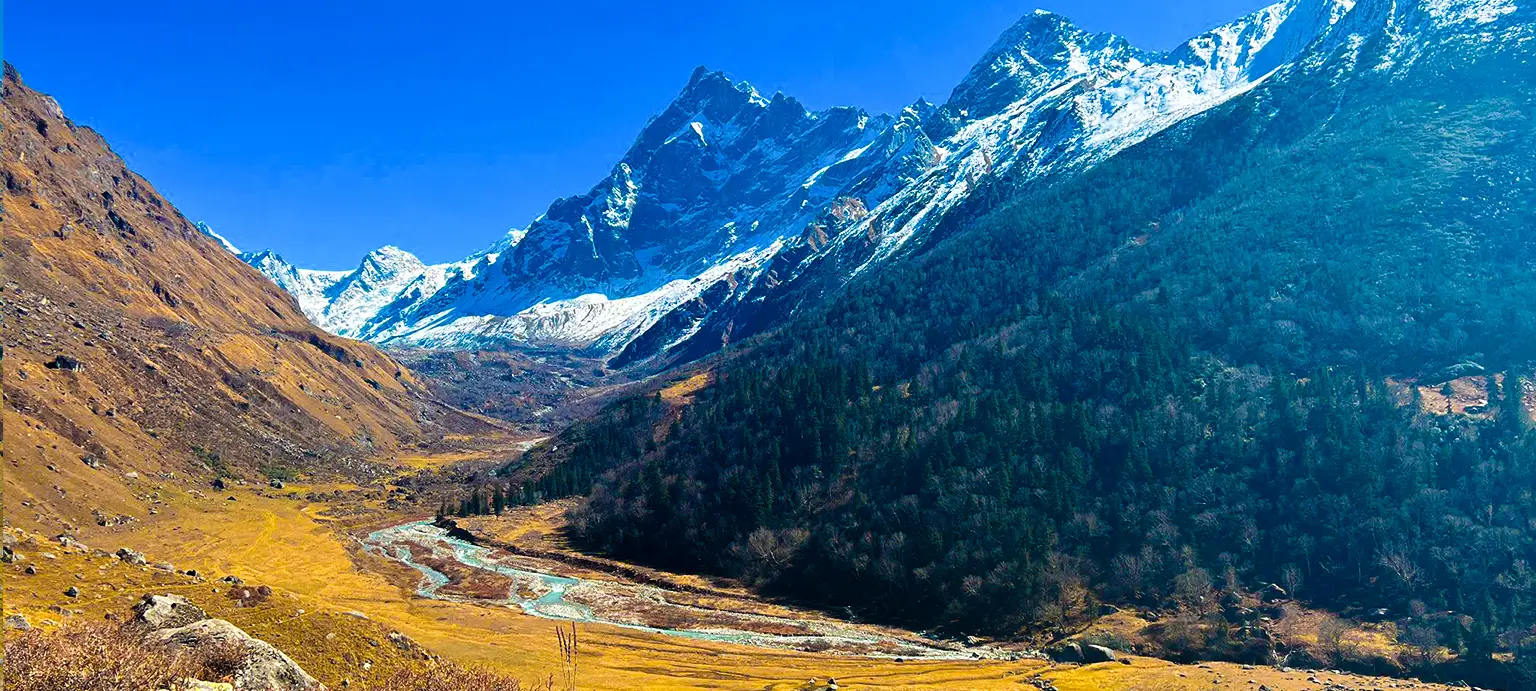
Hidden deep inside the Garhwal Himalayas of Uttarakhand, Har Ki Dun is a beautiful Himalayan valley known for its ancient mountain villages, dense forests, rivers, alpine landscapes, and views of towering peaks.
Unlike treks that focus mainly on reaching a summit, the Har Ki Dun Trek is about the entire journey. The trail takes you through the Govind Pashu Vihar National Park and Wildlife Sanctuary region, alongside the Supin River and through traditional villages where the landscape and mountain culture come together.
For trekkers planning the Har Ki Dun Trek in 2026, this Himadri Treks guide covers the itinerary, trek cost, best time, difficulty, route, weather, packing essentials, preparation, and other important information you should know before booking.
From ₹6,950 / person
+ 5% GST • Selected 2026 departures
Why Choose the Har Ki Dun Trek?
Har Ki Dun is different from many popular Himalayan treks because there is no single summit that defines the experience.
The valley itself is the destination.
The trail gradually takes you deeper into the mountains through forests, streams, traditional settlements and remote camps before reaching the magnificent Har Ki Dun Valley.
Himalayan Valley
A naturally enclosed valley surrounded by high mountains and increasingly remote landscapes.
Ancient Villages
Traditional settlements such as Osla add a strong cultural character to the journey.
Forest Trails
Large sections pass through beautiful Himalayan forests and changing vegetation.
1. A Classic Himalayan Valley
Har Ki Dun is surrounded by high mountains and has the character of a naturally enclosed Himalayan valley.
As you move deeper into the region, roads and towns gradually disappear and the landscape becomes increasingly remote.
2. Traditional Himalayan Villages
One of the highlights of Har Ki Dun is the opportunity to pass through traditional villages of the region.
Villages such as Osla give the trail a cultural character that is difficult to find on summit-focused treks.
The architecture, agricultural fields and traditional way of life are all part of the Har Ki Dun experience.
3. Forest Trails
Large sections of the trek pass through Himalayan forests.
Depending on the season and section of trail, trekkers encounter a mixture of trees and mountain vegetation that creates a completely different atmosphere from exposed high-altitude terrain.
4. The Supin River
The Supin River is an important part of the landscape.
For significant sections of the journey, the river, streams and waterfalls accompany trekkers through the valley.
5. Mountain Views
Har Ki Dun offers views of the surrounding Garhwal Himalayan landscape, with Swargarohini being among the best-known mountain formations associated with the valley.
Har Ki Dun Trek Itinerary 2026
At Himadri Treks, the Har Ki Dun journey can be organized as a carefully planned 6-day itinerary beginning and ending in Dehradun.
Exact campsites, roadheads and walking distances can occasionally change because of weather, trail conditions, local regulations or operational requirements.
Dehradun to Sankri
Begin your Har Ki Dun journey with a scenic drive from Dehradun toward Sankri through mountain roads, rivers and forested landscapes.
Sankri is one of Uttarakhand's best-known trekking base villages and serves as the starting point for several routes in the Govind Pashu Vihar region.
Sankri → Roadhead → Osla
Drive from Sankri toward the current roadhead and begin trekking through forests and alongside the river toward the Osla region.
Osla to Boslo Camp
Leave Osla and move deeper into the Har Ki Dun region, gradually gaining altitude through changing Himalayan terrain.
Boslo Camp → Har Ki Dun Valley → Boslo Camp
Trek toward Har Ki Dun Valley and experience one of the most dramatic landscapes of the journey before returning to Boslo Camp.
Boslo Camp to Osla
Begin descending toward Osla and experience familiar sections of the route from a completely different perspective.
Osla → Roadhead → Sankri → Dehradun
Complete the final trekking section, meet the vehicle at the roadhead and begin the return journey to Dehradun.
Mountain-road journeys can be delayed by weather, traffic or road conditions. Avoid booking tightly timed onward travel immediately after your expected arrival in Dehradun.
Har Ki Dun Trek Route
Road access in mountain regions can change over time, so the exact roadhead used for a particular batch may vary.
Har Ki Dun Trek Cost 2026
For travelers planning their trip, Har Ki Dun Trek cost is naturally one of the most important considerations.
Selected Himadri Treks 2026 departures
The final price can depend on the departure date, group arrangement, transportation option, accommodation, inclusions and other operational factors.
What May Be Included?
Common Trek Inclusions
What May Not Be Included?
Check Before Booking
Best Time for Har Ki Dun Trek in 2026
Har Ki Dun changes considerably throughout the trekking season.
There is therefore no single “best” month for everyone. The right time depends on whether you prefer snow, greenery, clearer mountain views, warmer daytime conditions or autumn landscapes.
Early Season
Colder conditions with possible remaining snow at higher elevations.
Green & Pleasant
Greener landscapes and generally milder daytime conditions.
Clearer Views
Post-monsoon scenery, autumn landscapes and potentially excellent mountain visibility.
March–April
Early-season conditions can offer a colder Himalayan experience, with snow potentially remaining in higher sections.
May–June
Late spring and early summer bring greener surroundings and generally milder daytime conditions.
July–August
The monsoon affects much of Uttarakhand.
Heavy rain can create slippery trails, landslide risks, swollen streams and difficult road conditions.
September
After the monsoon begins to withdraw, the landscape can be exceptionally green.
October
October is one of the most attractive months for Har Ki Dun for trekkers who prioritize crisp autumn landscapes and potentially clearer mountain views.
November
November brings a much colder experience.
“For many trekkers, May–June and September–October are among the most attractive Har Ki Dun trekking windows.
Har Ki Dun Trek Difficulty
The Har Ki Dun Trek is generally considered moderate.
It does not involve technical mountaineering under normal trekking conditions, but that does not mean it should be taken lightly.
Trekking Challenges
Is Har Ki Dun Suitable for Beginners?
Yes, fit beginners can consider Har Ki Dun, but it is not a trek you should attempt without preparation.
A beginner should be comfortable walking for several hours on consecutive days.
Har Ki Dun Altitude
Har Ki Dun reaches approximately 11,700–12,000 feet, depending on the exact point visited.
Although this is lower than some Himalayan passes and summits, altitude still matters.
Walk at a comfortable pace, stay hydrated and communicate unusual symptoms such as headache, nausea, dizziness or unusual fatigue to your trek leader.
Har Ki Dun Weather and Temperature
Temperatures on Har Ki Dun vary considerably according to month, altitude, cloud cover, wind, precipitation and campsite location.
Lower villages may feel relatively comfortable during the day while higher sections can become cold quickly after sunset.
Even during warmer trekking months, you should carry adequate insulating layers.
Rather than relying on a fixed temperature table months in advance, check the latest forecast and trek-specific packing advice shortly before departure.
What to Pack for Har Ki Dun Trek
Packing correctly can make the difference between a comfortable trek and a difficult one.
Trek Equipment
Clothing Layers
Do Not Forget
How to Reach Har Ki Dun
Reach Dehradun
Dehradun is the main assembly point for many Har Ki Dun departures and is connected by road, rail and air.
Dehradun to Sankri
Sankri is approximately 190–200 km from Dehradun, depending on the route.
Sankri to the Trek Roadhead
The group travels toward the current roadhead, from where the walking portion of the trek begins.
Accommodation During the Trek
Accommodation on Har Ki Dun can include a combination of guesthouses, homestays and tents depending on the itinerary, campsite regulations and operational arrangements.
Remote Himalayan trekking should not be approached with hotel-style expectations.
Facilities become increasingly basic as you travel farther from road-connected settlements.
Food During the Trek
Organized Himadri Treks departures provide meals according to the inclusions of the selected package.
Trekking meals are generally planned to be practical, warm and suitable for active days in the mountains.
Trekkers should inform the team in advance about relevant dietary requirements or allergies.
Mobile Network and Electricity
Network connectivity becomes unreliable as you move deeper into the mountains.
Do not expect continuous mobile internet or phone coverage throughout the trek.
Electricity may also be limited or unavailable at remote locations.
Limited connectivity can be part of the experience.
Carry a power bank, conserve battery and enjoy a few days away from constant digital distractions.
Responsible Trekking in Har Ki Dun
Har Ki Dun lies within an environmentally sensitive Himalayan region.
Every trekker has a responsibility to protect it.
Har Ki Dun vs Kedarkantha
Valley Journey
Summit Journey
Choose Har Ki Dun if you prefer a longer journey through valleys, forests and traditional villages.
Choose Kedarkantha if you primarily want a shorter summit-oriented winter trekking experience.
Frequently Asked Questions About Har Ki Dun Trek
Har Ki Dun is generally considered a moderate Himalayan trek. The main challenges are consecutive walking days, trail distance, altitude, weather and terrain rather than technical climbing.
Yes. Fit beginners can consider Har Ki Dun with appropriate physical preparation and suitable equipment.
Spring to early summer and post-monsoon to autumn are typically the main trekking windows. May–June and September–October are particularly attractive for many trekkers.
The main valley is approximately 11,700–12,000 ft, depending on the exact location reached.
The Himadri Treks itinerary described in this guide is 6 days, including travel between Dehradun and the Sankri region.
Selected Himadri Treks departures can start from approximately ₹6,950 per person + 5% GST. Always confirm the latest batch price and inclusions before booking.
Connectivity becomes unreliable as you move deeper into the valley. Do not depend on continuous mobile coverage.
No. Har Ki Dun is primarily a valley trek. The landscape, villages, forests and journey into the valley are the main attractions.
Who Should Choose the Har Ki Dun Trek?
Har Ki Dun may be an excellent choice if you enjoy:
Har Ki Dun rewards trekkers who enjoy the journey itself.
Why Trek Har Ki Dun With Himadri Treks?
A Himalayan trek is more than a holiday booking.
It requires route planning, appropriate equipment, physical preparation, weather awareness, safety management and responsible decisions in the mountains.
Plan Your Har Ki Dun Trek 2026
Har Ki Dun is not defined by one summit or one viewpoint.
It is the early morning departure from Sankri.
The sound of the river beside the trail.
The forests between mountain villages.
The long walking days.
The cold evenings at camp.
And finally, standing inside one of Uttarakhand's remarkable Himalayan landscapes after travelling there entirely on foot.
If you are planning your Har Ki Dun Trek in 2026, prepare your fitness, choose your season carefully, pack according to expected conditions and understand what the journey involves before arriving in the mountains.
Journey Beyond the Peaks.
Explore responsibly. Trek safely. Respect the Himalayas.
Explore Har Ki Dun Trek → PACKING
 KEDARKANTHA
 HIMADRI TREKS