
The Har Ki Dun Trek is among the most breathtaking and culturally rich treks in the Garhwal Himalayas. Often referred to as the “Valley of Gods,” Har Ki Dun lies at an elevation of about 11,700 feet in the Govind Pashu Vihar National Park and Wildlife Sanctuary in Uttarakhand. Surrounded by stunning Himalayan peaks, ancient villages, dense forests, and the rushing Supin River, the valley offers a unique blend of mountain beauty, mythology, wildlife, and local culture. According to Hindu legend, Har Ki Dun is associated with the Pandavas’ journey to heaven, and the dramatic Swargarohini mountain range adds to the valley’s mythological character. The trek begins in Sankri and passes through traditional Himalayan settlements such as Osla and Gangad, where age-old architecture and mountain customs are still preserved. Covering approximately 42 kilometers, the trek is generally considered moderate and takes trekrs through deodar, chestnut, and alpine forests before opening into the breathtaking Har Ki Dun valley. The trail follows the Supin River, passing typical villages, lush meadows, and snow-capped Himalayan ranges, making it one of Uttarakhand’s most unforgettable trekking experiences.
Why Is the Har Ki Dun Trek So Special?
1. The Unique Hanging Valley Landscape
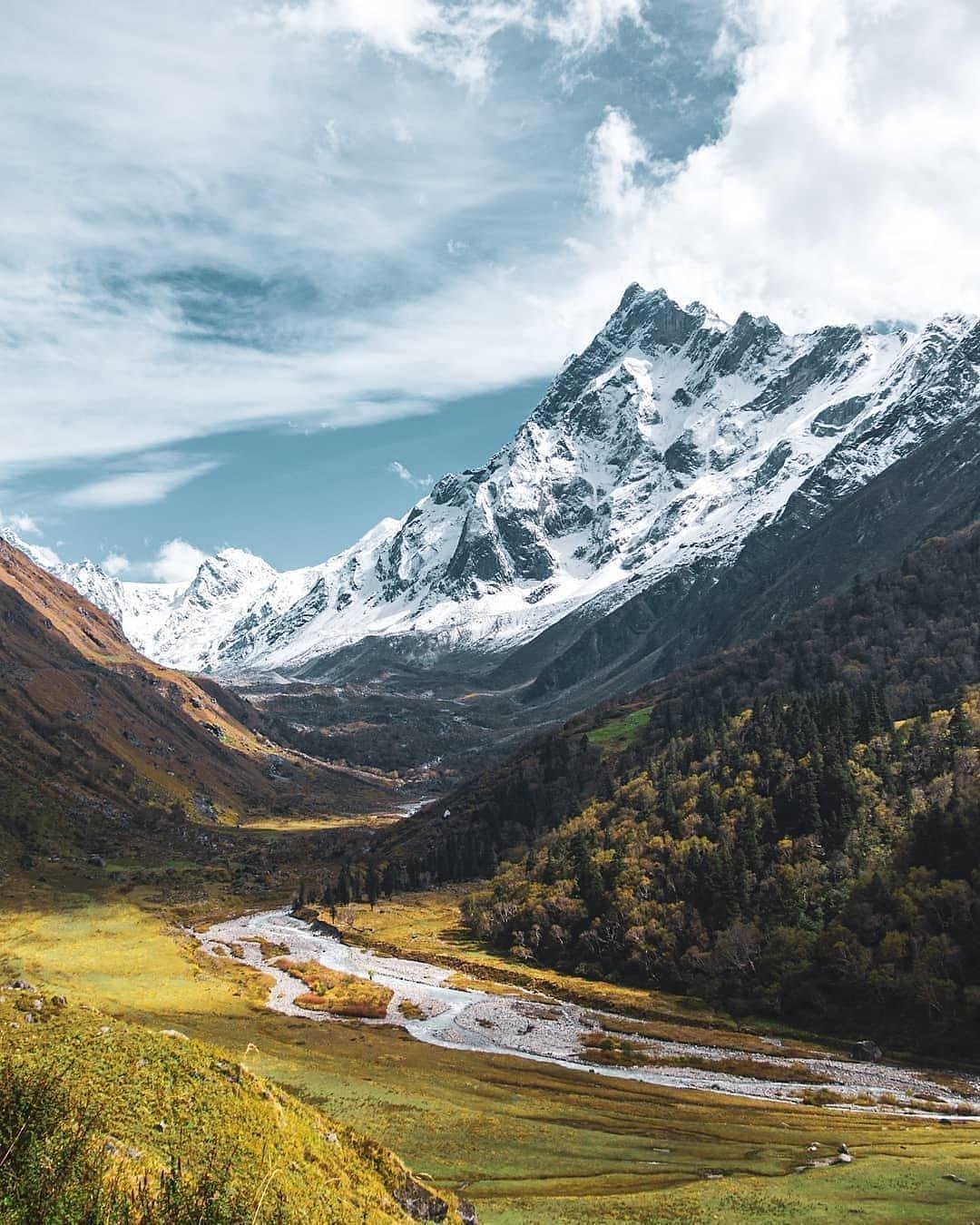
One of the most intriguing aspects of Har Ki Dun is its hanging valley landscape, shaped over thousands of years by rivers and glaciers. The valley shows dramatic elevation changes and distinctive glacial formations. Glaciers and the Supin River gradually carved the surrounding mountains, creating massive gorges, elevated meadows, and wide valley sections that give Har Ki Dun its characteristic form. The lower valley is a broad, meadow-like basin ringed by majestic Himalayan peaks. The contrast between the expansive valley floor and the steep mountain walls offers stunning views throughout the trek.
2. Traditional Kath-Kuni Architecture
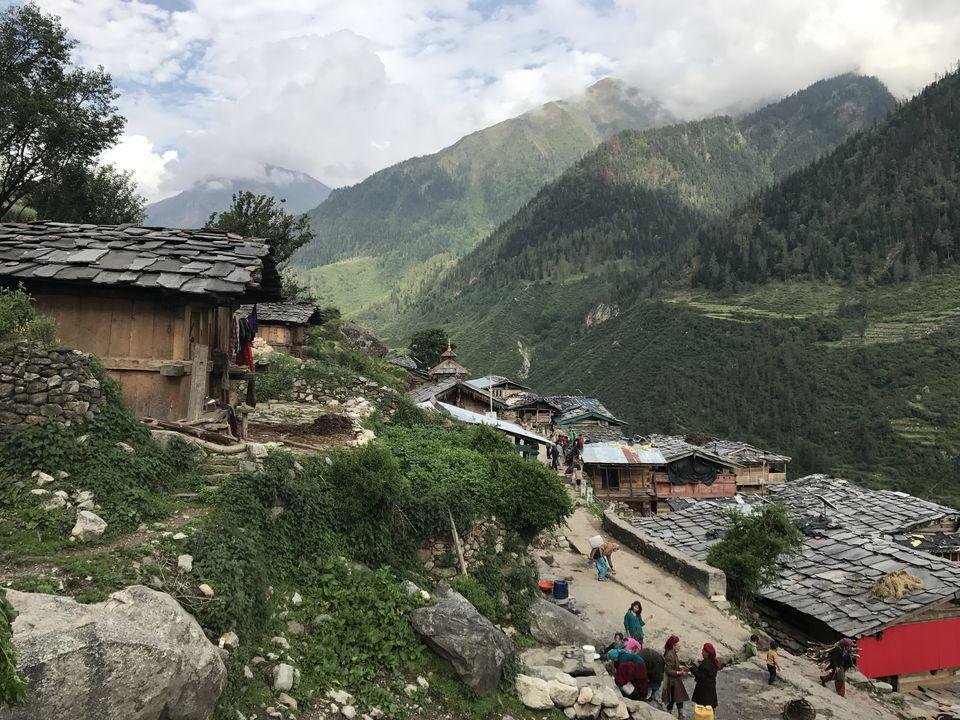
The communities of Osla and Gangad are a key part of the Har Ki Dun experience. Traditional Himalayan homes feature Kath-Kuni construction, an ancient technique that combines stone and timber. This method provides excellent insulation against harsh mountain weather and is well suited to the earthquake-prone conditions of the Himalayas. The use of deodar wood and stone, along with wooden balconies and intricate traditional carvings, gives these villages a distinctive appearance. For trekkers, walking through these settlements offers more than beautiful scenery; it provides insight into a typical Himalayan way of life that has evolved over centuries.
3. Scenic Trails Along the Supin River
The Supin River is one of the main companions throughout the Har Ki Dun Trek. Several sections of the trail run alongside the river, through forests, meadows, and mountain villages. The sound of flowing water, combined with lush greenery and towering peaks, creates a serene atmosphere for the journey. The changing landscape along the river makes the trek particularly rewarding for nature lovers and photographers. As you approach Har Ki Dun, the valley gradually opens to reveal expansive Himalayan views.

4. From Dense Forests to Alpine Meadows
One of the most memorable aspects of the Har Ki Dun Trek is the gradual transition through different Himalayan environments. The lower portions of the trek pass through forests dominated by: Deodar, Chestnut, Pine, Oak, Birch, As altitude increases, the forests become less dense and give way to alpine meadows and high-altitude vegetation. Bhojpatra, or Himalayan Birch (Betula utilis), is a notable species in the upper Himalayan forest zone. Its distinct white, peeling bark and ability to withstand harsh mountain conditions make it an important part of the high-altitude ecosystem. This changing vegetation along the route makes Har Ki Dun an excellent trek for anyone interested in learning more about Himalayan flora and fauna.
5. Spectacular Views of Swargarohini
The Swargarohini massif is without doubt one of the main highlights of the Har Ki Dun valley. Its towering snow-covered peaks rise dramatically above the valley, creating a magnificent backdrop for trekkers. Closely associated with the Pandavas’ legendary ascent to heaven, the mountain cluster adds another layer of mythological and historical significance to the trek. If the skies are clear, trekrs can also see several other notable Himalayan mountains, such as Bandarpoonch and Black Peak (Kalanag), across different parts of the region. The view from Har Ki Dun Valley, with this massive mountain range rising above the meadows, truly captures the spirit of the Himalayas.
A Perfect Trek for Beginners
The Har Ki Dun Trek is believed to be more than just a high-altitude trek. It is a journey through ancient villages, Himalayan forests, glacial landscapes, alpine meadows, rushing rivers, and long-standing mythology. From the lovely town of Sankri to the breathtaking scenery of Har Ki Dun, every segment of the trail offers visitors something new. Moderate Himalayan Trek Altitude: Approx. 11,700 ft , Uttarakhand, India , Ancient Himalayan Villages , Alpine Meadows & Himalayan Flora, Views of Swargarohini & Other Himalayan Peaks , Walk through the Valley of Gods and experience the Himalayas beyond the ordinary. Himadri Treks – Journey Beyond the Peaks.
Har Ki Dun Trek Itinerary, Route Map & Elevation Chart
Har Ki Dun Trek Itinerary – 5 Days / 4 Nights
The Har Ki Dun Trek with Himadri Treks takes you into the stunning Garhwal Himalayas, combining beautiful mountain drives with isolated Himalayan villages, thick forests, alpine meadows, and the magnificent Har Ki Dun valley. This carefully designed 5-day/4-night Har Ki Dun Trek itinerary is ideal for trekkers who want to explore the valley while gradually increasing altitude, allowing enough time for recovery and acclimatization. The trek begins in Dehradun and passes through Sankri, Osla, and Boslo before you reach Har Ki Dun. After exploring the valley, you head back to Osla and then complete your return journey to Dehradun.
Day 1: Drive from Dehradun (1,480 ft.) to Sankri (6,400 ft.)
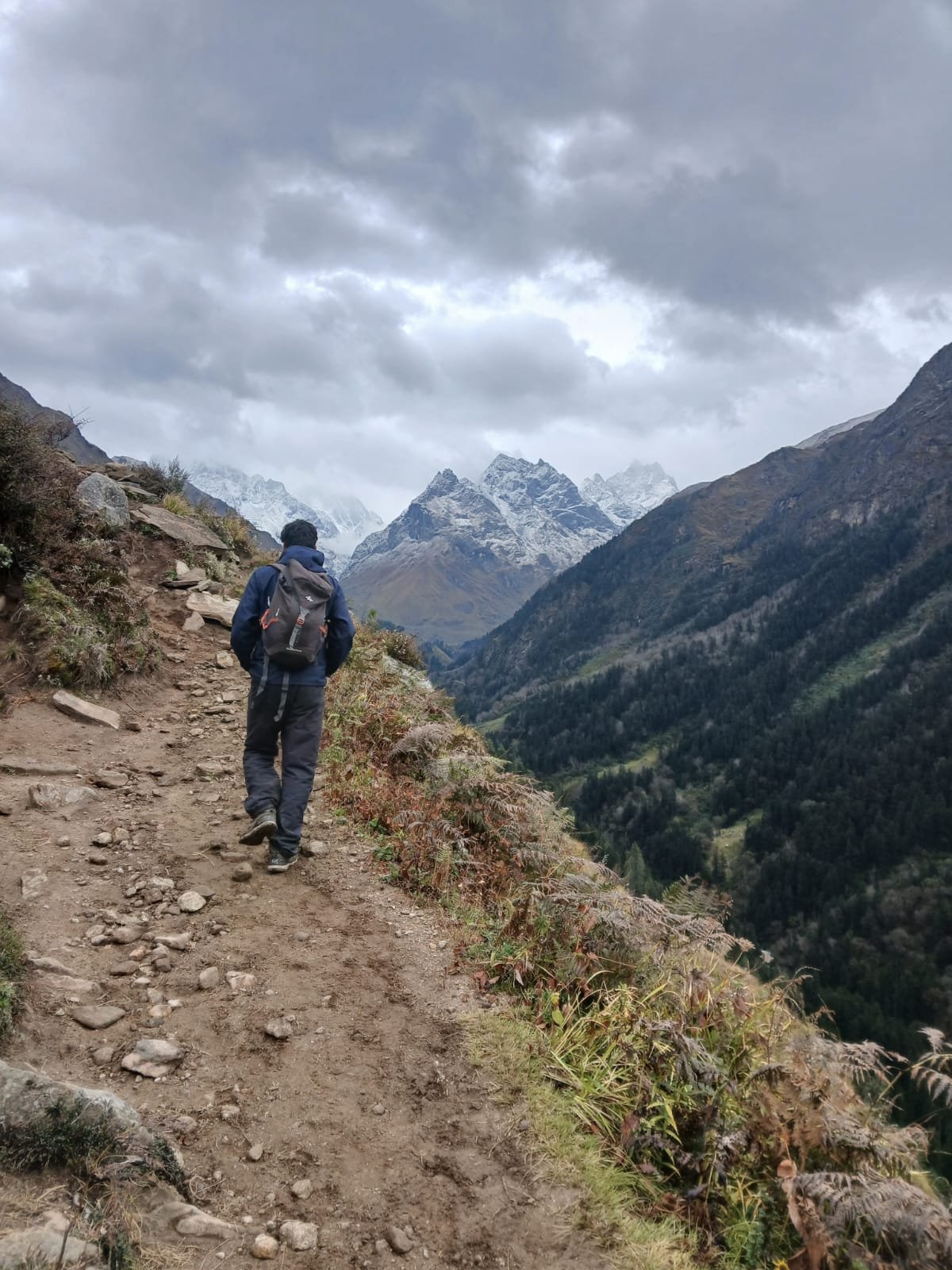
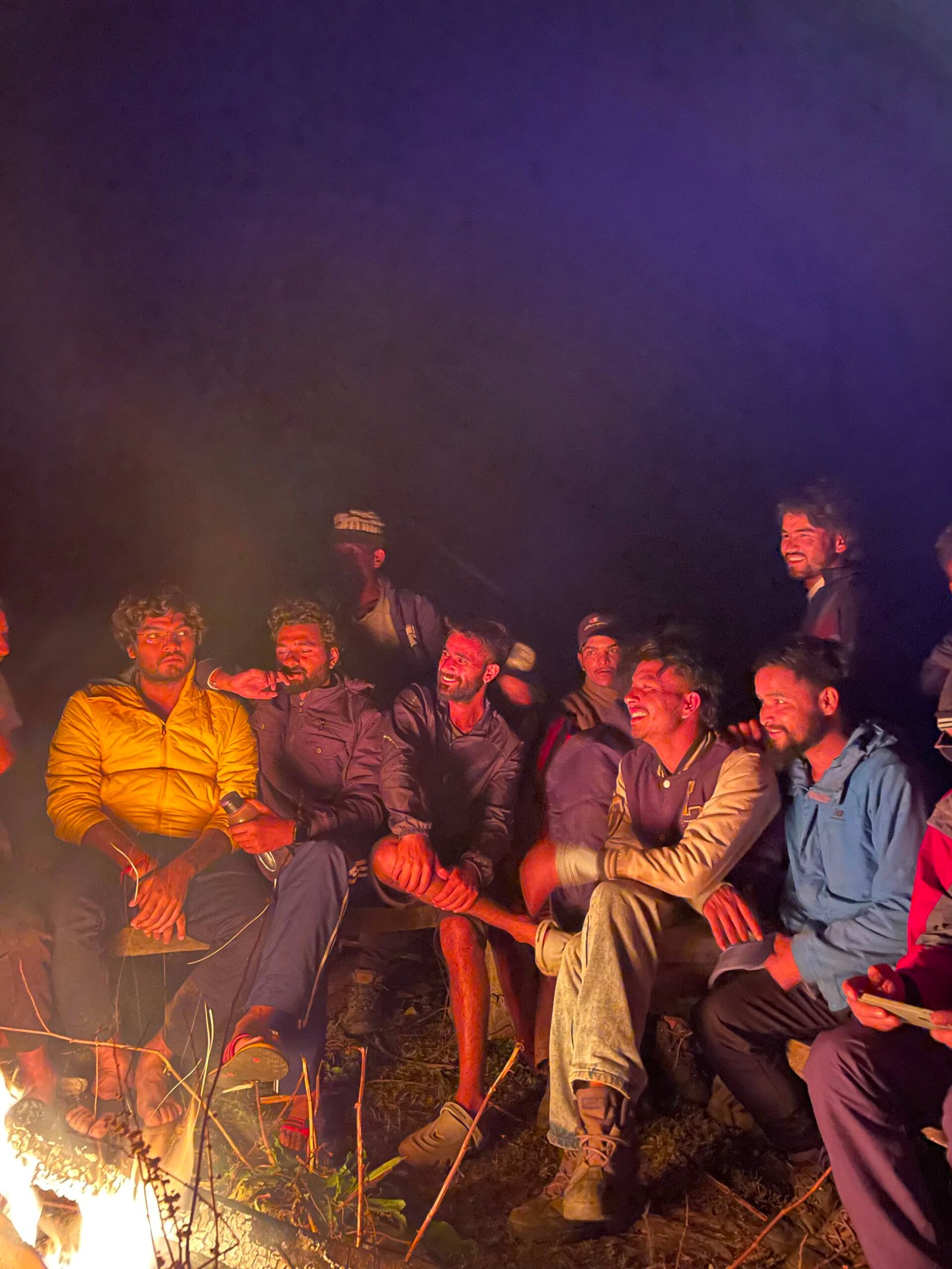
Journey Overview:Your Har Ki Dun Trek with Himadri Treks starts very early, departing from Dehradun. After a brief introduction to the Himadri Treks team, you begin your scenic journey toward Sankri, one of the main trekking gateways to the Western Garhwal Himalayas. The route takes you through the ever-changing landscapes of Uttarakhand, starting in the low Himalayan valleys and moving into forested mountain terrain. Along the way, you pass charming mountain towns and villages, river valleys, and winding Himalayan roads. The road generally passes through Mussoorie, Naugaon, Purola, Mori, and Netwar before arriving at Sankri. As you gain altitude, the terrain becomes more mountainous, and the temperature begins to drop. The final climb to Sankri offers beautiful views of surrounding Himalayan forests and mountain slopes.
Scenic Highlights
- Beautiful drive through the Yamuna and Tons valleys
- Dense pine and deodar forests
- First views of the Swargarohini Range
- Traditional wooden Himalayan houses
- Picturesque mountain villages
Local Experience: Sankri is a small Himalayan village famous for its wooden architecture and warm hospitality. It serves as the base camp for many iconic Himalayan treks and offers an authentic glimpse into the lifestyle of the local mountain communities.
Acclimatization At Sankri:Although there is no major trekking today, you still experience a significant elevation gain from Dehradun to Sankri. Trekkers are advised to spend the evening relaxing and letting their bodies adapt to the mountain conditions. Avoid unnecessary physical exertion immediately after reaching Sankri. Stay well hydrated, eat a proper meal, and go to bed early.
Trek Leader's Advice
- Carry enough cash before reaching Sankri — there are no ATMs beyond this point
- Keep warm clothing easily accessible
- Charge electronic devices whenever possible
- Drink plenty of water during the drive
Day 2: Sankri to Osla – Road Journey & Trek to the Himalayan Village.
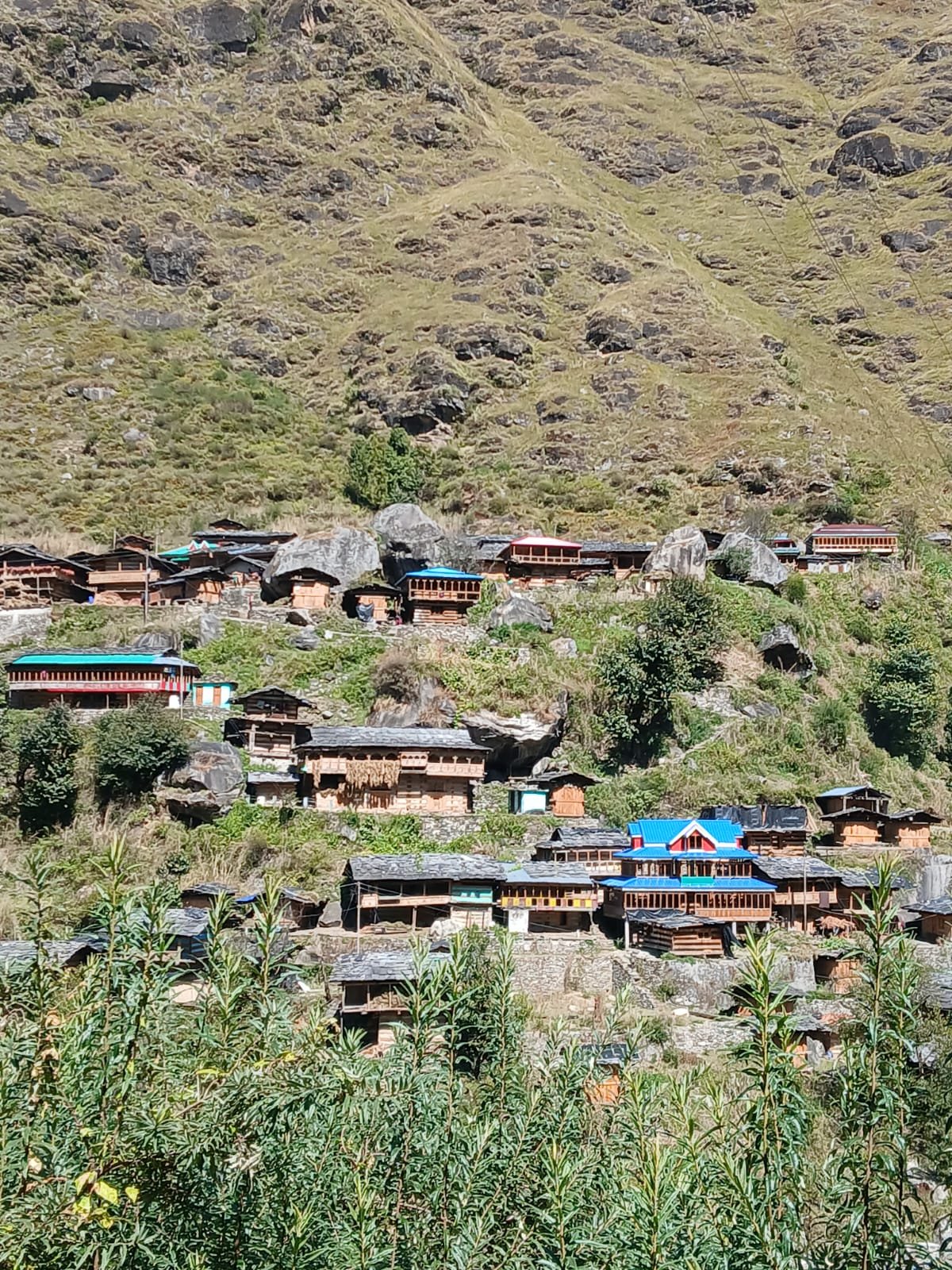
Day Overview: After breakfast, the Himadri Treks team begins the journey from Sankri toward the remote villages of the Har Ki Dun region.
The initial section is covered by road. The roughly 20 km mountain drive takes you deeper into the valley and closer to the trekking trail.
Once you reach the trailhead, the rest of the journey to Osla continues on foot.
Trek to Osla
The walk gradually leads you away from the road and into a serene Himalayan landscape.
Depending on the route and trail conditions, the path may include wooded sections, stone trails, mountain slopes, and small stream crossings.
The area becomes increasingly remote as you approach Osla.
Osla is one of the most fascinating villages in the Har Ki Dun region, known for its traditional wooden-and-stone houses, agricultural fields, and unique Himalayan culture.
Village Experience
- On arrival in Osla, check in to the designated campsite or homestay.
- On arrival in Osla, check in to the designated campsite or homestay.
- It is a fantastic chance to glimpse the traditional way of life in the local Himalayan communities.
- Osla village altitude is approximately 8,500 ft
Acclimatization:The gradual elevation gain from Sankri up to Osla is a crucial part of the acclimatization process. Do not focus too much on speed. The trek leader will set an easy pace and provide periodic breaks as needed.
Camp & Stay Logistics
- Camping and homestay accommodation
- Sleeping arrangements
- Dining space
- Hot food
- Drinking water
- Basic toilet facilities
- First-aid assistance
- Luggage management
- 20 km scenic mountain road ride
- Trek through forests and Himalayan landscapes
- Arrive at the quaint village of Osla
- Explore the local Himalayan architecture and culture ,gradual increase in altitude for acclimatization
Team members from the Himadri Treks team will arrange:
Highlights
Day 3: Osla Village to Boslo Camp
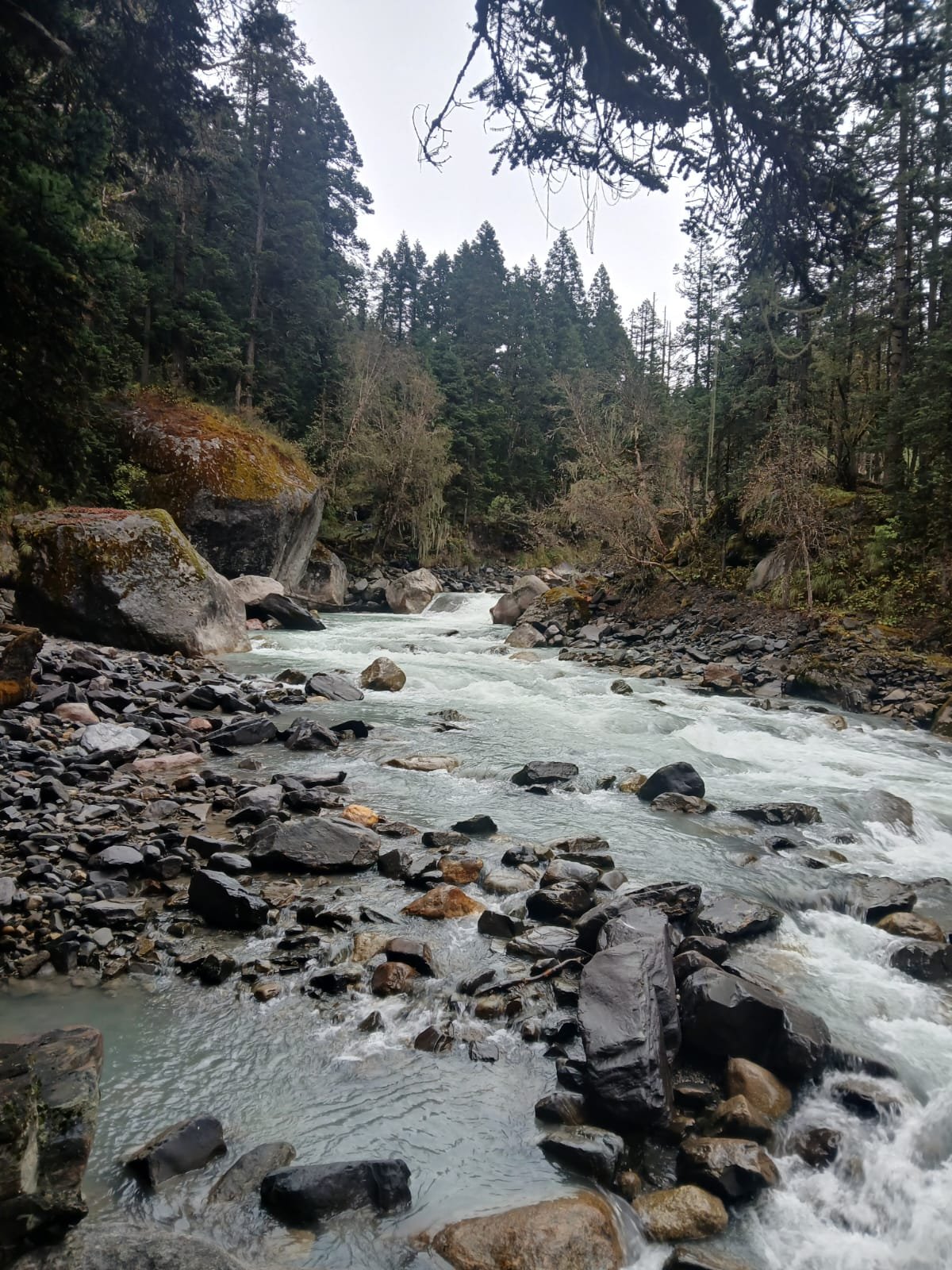
Trek Overview: Day 3 begins on an energetic note in the picturesque village of Osla. After breakfast, trekkers can unwind, organize their backpacks, and get ready for an enjoyable day of hiking in the mountains. Once you leave Osla behind, the overall feel of the trek slowly begins to change. Traditional village settings give way to more peaceful Himalayan landscapes, with fewer signs of human settlement and a stronger sense of wilderness. The trail takes you deep into the Har Ki Dun valley, which is surrounded by forested mountains, sloping hillsides, open meadows, and breathtaking views of the higher Himalayan landscape. It is an important day on the trek, as you begin to gain significant elevation and move toward a more remote, high-altitude campsite.
Scenic Highlights
- Trek Through Forests and Meadows, the route to Boslo Camp winds through a beautiful mix of dense Himalayan forest and wide mountain landscapes. Depending on the season and trail conditions, you may walk under tall trees, cross small mountain streams, and gradually enter broad alpine meadows and grasslands.
- Along the way, you might encounter: Dense Himalayan forests, Small water crossings, Open grasslands, Rocky and uneven mountain trails, Beautiful alpine meadows, Towering peaks and mountain ridges, Panoramic views of distant valleys, Seasonal wildflowers and Himalayan vegetation, Peaceful stretches of unspoiled mountains.
- The constantly changing terrain makes this section especially scenic. At times, the forest opens up to reveal distant ridges and sweeping mountain slopes, giving you the chance to pause, breathe deeply, and take in the vastness of the surrounding Himalayas.
- As you climb higher, the air grows cooler, and the views become wider. Villages feel far away, and the serene surroundings create a strong sense of immersion in Himalayan nature.
- Snow-covered alpine meadows
Acclimatization: Spend the afternoon relaxing or take a short acclimatization walk around the campsite. Proper rest and hydration are essential before summit day.
Trek Leader's Advice
- Take regular breaks when needed, drink plenty of water, and focus on enjoying the changing landscape rather than just hurrying to reach the campsite.
- Keep spare batteries inside your sleeping bag
- A Himadri Treks guide leads the group at a gentle, steady pace that helps trekkers conserve energy and adjust comfortably to the rising altitude.
Day 4: Boslo Camp – Har Ki Dun Valley – Boslo Camp.
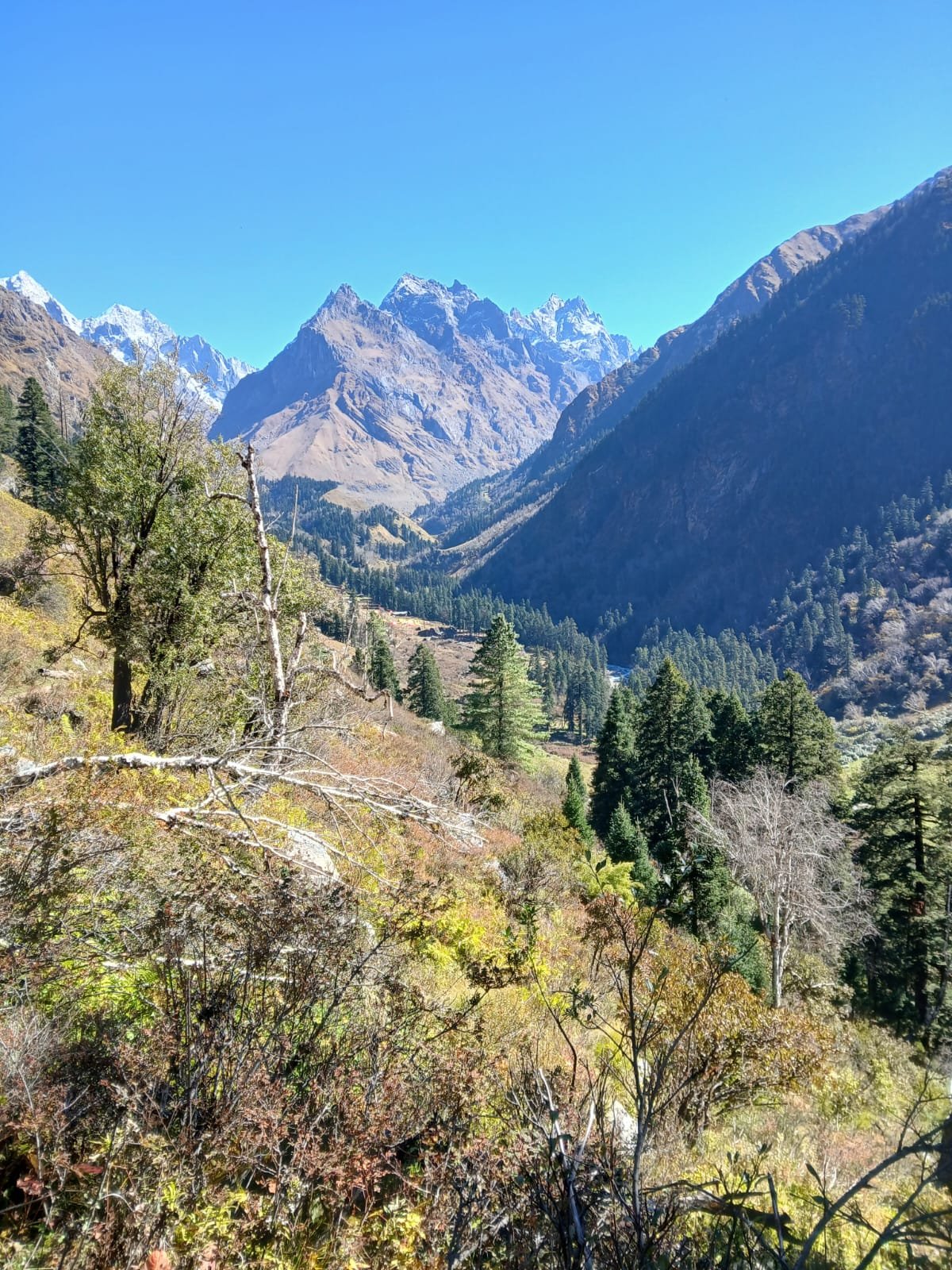
Summit Day: Today is the most important day of the trek. We leave Boslo Camp early in the morning and move deeper into the Himalayan landscape. As we gain altitude, the forest gradually opens into vast alpine meadows, unveiling the stunning beauty of Har Ki Dun Valley. The trail leads to Har Ki Dun, a renowned and remote valley surrounded by imposing Himalayan peaks, glacial streams, and ancient forests. The final stretch of the trail offers breathtaking views throughout the trek. After exploring and enjoying the valley, we trek back to Boslo Camp. The evening is for relaxation, delicious meals, and sharing stories from the day’s journey. Today is not about rushing to an endpoint, but about experiencing what it feels like to live in the valley.
Story of Har Ki Dun – The Valley of Gods: Har Ki Dun is often referred to as the “Valley of Gods,” a name that reflects the profound connection between the landscape, mythology, and local culture. According to local beliefs, this valley was once associated with the Pandavas, the legendary heroes of the epic Mahabharata. Folklore suggests that the Pandavas passed through this region on their journey to the upper Himalayas. The stunning landscape of Har Ki Dun adds to its mythical aura. Bordered by towering Himalayan mountains, ancient forests, and streams that meander through the valley, Har Ki Dun feels like a place untouched by time. Over the years, people from the surrounding villages have remained closely connected to the mountains. Their stories, temples, traditional agricultural practices, and seasonal rhythms sustain the valley’s unique cultural identity. At Himadri Treks, we believe that treking to Har Ki Dun is not just about reaching a point on a map. It is a journey through a place where nature, culture, and mythology meet.
Summit Views:
From the summit, enjoy breathtaking 360° views of:
- Swargarohini
- Alpine meadows
- Black Peak
- Har Ki Dun is renowned for its beauty, scenic appeal, alpine landscapes, and historical significance.
- High-altitude grasslands
Highlights:
From the summit, enjoy breathtaking 360° views of:
- Ancient forests and remote wilderness
- Photographic opportunities throughout the trail
- Moments to pause, explore, and absorb the silence of the valley
- Return to Boslo Camp for a warm meal and a comfortable overnight stay.
- High-altitude grasslands
Camp Logistics
After exploring Har Ki Dun, we return to Boslo Camp. Hot food and drinks will be waiting for you at the camp, after which you will have time to relax and recuperate. Make sure you keep your wet clothing and trekking equipment organized so they can dry before the next day’s trek.
- Overnight: Boslo Camp
- Menu: Breakfast, packed lunch, and dinner
- Camp: Tented accommodation
Trek Leaders Advice
“Today you do not have to just trek through Har Ki Dun, but truly experience it. See the mountain peaks from afar, listen to the sound of the river, observe the changes in the forest, and take time to appreciate why generations of mountain people have considered the valley sacred.” Har Ki Dun is more than just a destination. It is a journey to the very heart of the Himalayan mountains.
- This is not a day for competing with fellow trekkers. Walk at your own pace and follow the leader's trek guidelines.
- If you experience severe headaches, vomiting, dizziness, unusual breathlessness, or difficulty walking, contact your trek guide.
- Use trekking poles
Day 5: Boslo Camp(3,260 m) to Osla Village (2,600 m)
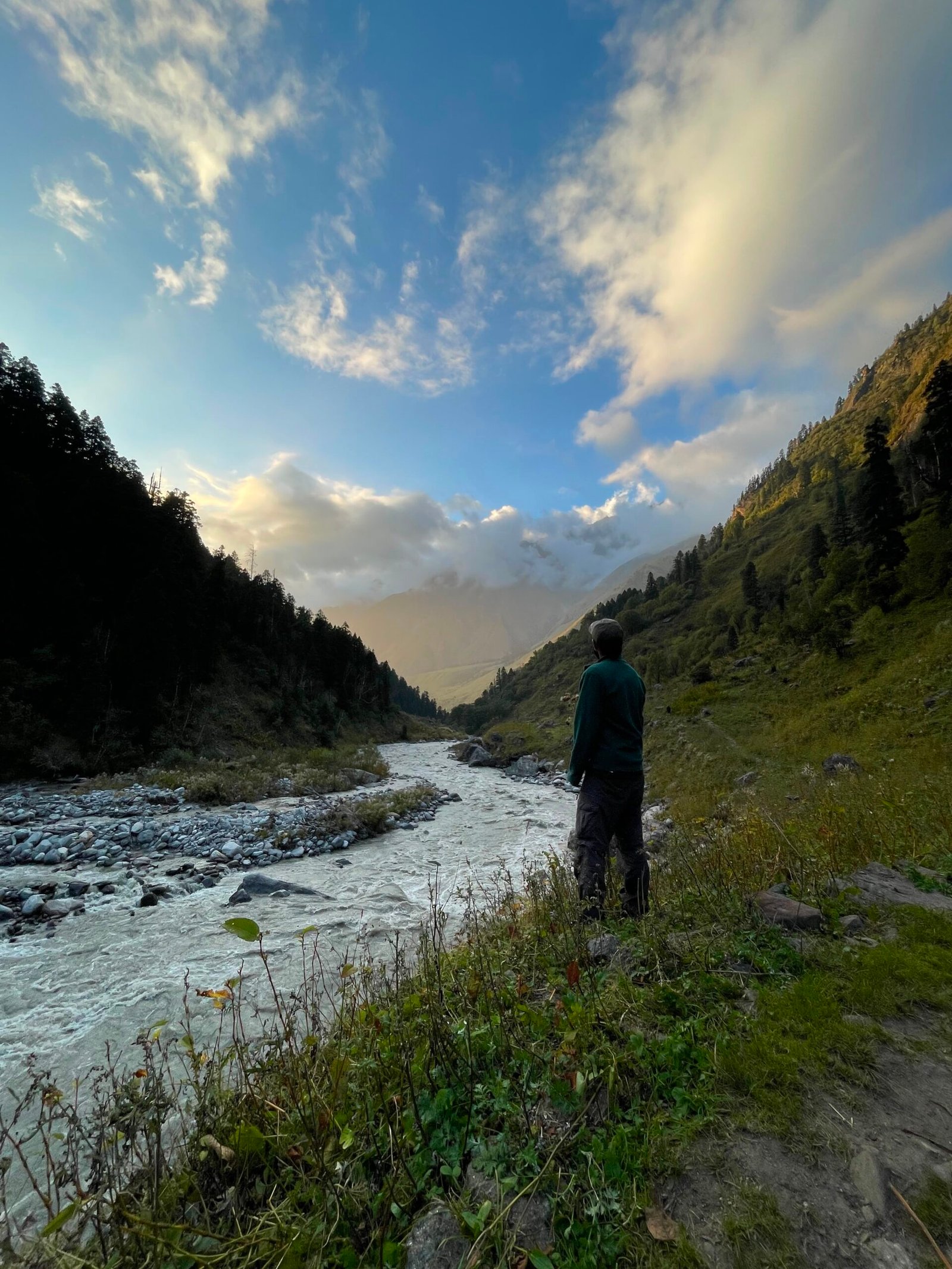
Day Overview :After a memorable experience in Har Ki Dun Valley, we begin our gradual descent toward Osla, a stunning traditional Himalayan village. The group departs Boslo Camp after breakfast and continues along the same trail through the breathtaking Himalayan landscape. As we lose altitude, the mountain terrain slowly transforms into forests and meadows, and we enter the greener areas of the lower valley. The descent offers a completely different view of the route we took on the way up. The surrounding mountain ranges remain impressive, and the sound of streams flowing down from the heights is a constant companion throughout the trek. we reach Osla Village, one of the most intriguing settlements in the Har Ki Dun region. Once we settle into our homestay or camp, we have time to rest, explore the village, and experience the culture of the mountain community living here. This evening, we step away from the high mountains and spend our time enjoying the warmth and hospitality of this Himalayan village.
Highlights:
A scenic descent from Boslo Camp to Osla, Changing Himalayan vegetation and landscapes, Views of Har Ki Dun Valley from a different perspective.
- Alpine meadows and forest trails
- Opportunity to experience local Himalayan culture
- Traditional wooden houses and village architecture
- Evening village walk and interaction with local residents.
- Restful and peaceful overnight stay in the mountains.
Culture & Local Experience – Osla Village:
Reaching Osla is about more than finding the next camping spot. Osla is famous for its traditional wood-built architecture, surrounded by terraced fields and distinctive Himalayan village life. It is a great place to see how local people have adapted their homes, farms, and daily routines to the mountainous environment. Enjoy a stroll through the village. Observe the houses built by locals and, when appropriate, engage with the people who live there. Remember that Osla is a living village, not a tourist attraction. Himadri Treks asks every client to respect local culture, customs, and traditions, including private homes and sacred spaces.
Camp Logistics
Once you reach Osla Village, check into the local homestay or campsite. In the evening, take the opportunity to rest, relax, and enjoy the local ambience.
- Overnight: Osla Village
- Menu: Breakfast, packed lunch, and dinner
- camp: Local homestay / camp
Treks Leader Advice
"The toughest aspect of a climb is the urge to speed up. Take your time, enjoy the changing scenery, and rest your legs. Today's focus is on safely moving from the high valley to the warmth of the village ."
Day 6: Osla Village – Sankri – Dehradun

Day Overview :Our last morning in the mountains begins with breakfast in Osla Village. In the morning, we bid goodbye to this beautiful village and start our trek toward Gangar, following the route that leads to the road taking us back to Sankri. The trek gradually descends through mountains and forests, giving us a final chance to soak in the tranquil scenery of Supin Valley. As the trek comes to an end, our vehicle waits at the roadhead. We then drive to Sankri, where we stop briefly before beginning our journey back to Dehradun. The mountains slowly fade behind us while the twisting roads lead us through the valleys of Uttarakhand. Har Ki Dun may be ending now, but the feelings from this Valley of Gods travel back home with us.
Departure :From the treks to the memories
We began our journey in Dehradun, carrying our bags along with excitement and anticipation for what awaited us in Sankri.
We explored forests, crossed mountains, entered traditional villages, and ascended into the Himalayan landscape until we stood beneath the majestic mountains of Har Ki Dun, the Valley of Gods.
As we take the final steps toward Gangar, the trail begins to disappear ahead of us.
Yet a trek is not measured only in kilometers or elevation gained.
It is measured in the first step on the path, conversations at camp, the sound of mountain streams, smiling community members, the peace of the high valleys, and the awe of standing beneath Himalayan peaks.
At Himadri Treks, we wish that your return from Har Ki Dun carries not only photographs, but also a deeper appreciation of the mountains and the people who live there.
The journey ends. The trek becomes a distant memory.
Departure – Sankri to Dehradun
Once you reach Sankri, take a short break to freshen up, have refreshments, and organize your luggage.
After that, we travel to Dehradun.
The journey takes about 8–10 hours, depending on road conditions, traffic, weather, and breaks en route. The road winds through mountain valleys before gradually descending toward the plains.
- Road Journey: Sankri – Dehradun
- Approx. Distance: 190–200 km
- Abbreviation: Same-day departure from Sankri
Departure Details:
Treks Final Leader Advice
“Don’t rush the last day of your journey. Remember the mountains, enjoy the final views, and reflect on the trek that brought you here. The Himalayas will be ready to welcome you back.”
Thank You for Trekking with Himadri Treks
Har Ki Dun was not only a trek.
It was an adventure through villages, forests, stories, and the heart of the Himalayan mountains.
Until the next trek, keep looking up at the mountains.
– Team Himadri Treks
Trek Summary
| Day | Route | Distance | Altitude |
|---|---|---|---|
| Day 1 | Dehradun → Sankri | 200 km Drive | 2,100 ft → 6,400 ft |
| Day 2 | Sankri → Roadhead → Osla | ~20 km drive + 4–6 km trek | 6,400 ft → 8,500 ft |
| Day 3 | Osla Village → Boslo Camp | 9 - 10 km trek | ~8,200 ft → ~10,400 ft |
| Day 4 | Boslo Camp → Har Ki Dun Valley → Boslo Camp | 7 km trek | ~10,400 ft → ~11,500 ft → ~10,400 ft |
| Day 5 | Boslo Camp → Osla Village | 9-10 km trek | 3,260 m → 2,600 m |
| Day 6 | Osla Village → Sankri → Dehradun | ~10 km trek + 20 km drive to sankri then 190 km drive to Dehradun | 2,600 m → 1,950 m → ~480 m |
Har-ki-dun Trek Route Map and Altitude Chart
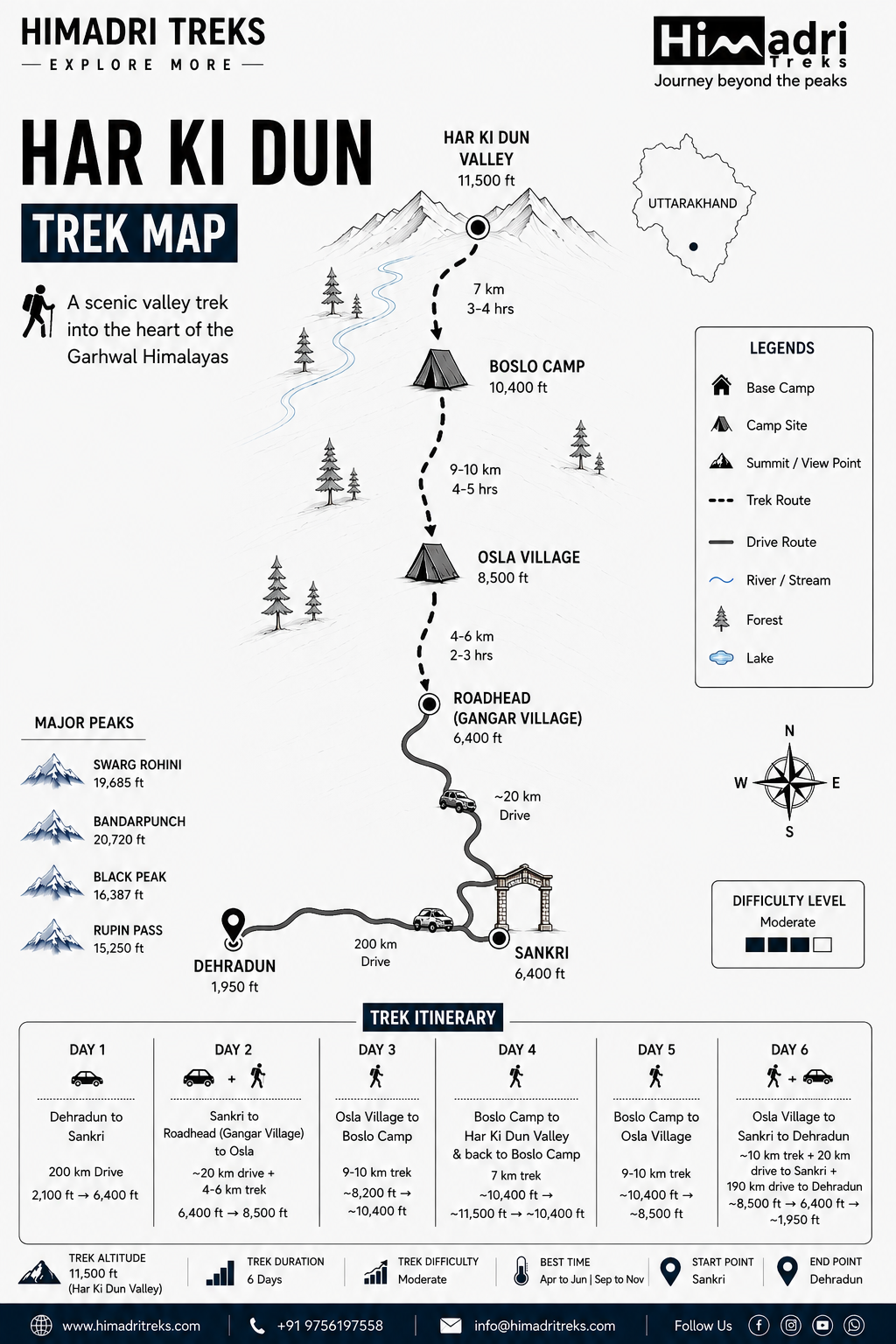
Trek Map
To help you prepare confidently for your Har Ki Dun Trek, Himadri Treks has created a detailed Trek Route Map that gives you a clear overview of the entire journey – from the starting point, through the Himalayan trails and Har Ki Dun Valley, and back. The map highlights essential information such as major trail points, elevations, campsites, important landmarks, terrain, distances between camps, and approximate trekking durations. This makes it easier to understand the route, plan each day, and get familiar with the changing landscapes along the trek.
At Himadri Treks, our goal is to provide trekkers with the information they need for a safe, well-planned, and enjoyable Himalayan adventure. We recommend studying the Har Ki Dun Trek Route Map before your journey so you have a clear understanding of the trail and its key sections. If you have any questions about the route, campsites, elevations, or trek itinerary, feel free to contact the Himadri Treks team. We are always happy to help you prepare for your journey beyond the peaks.
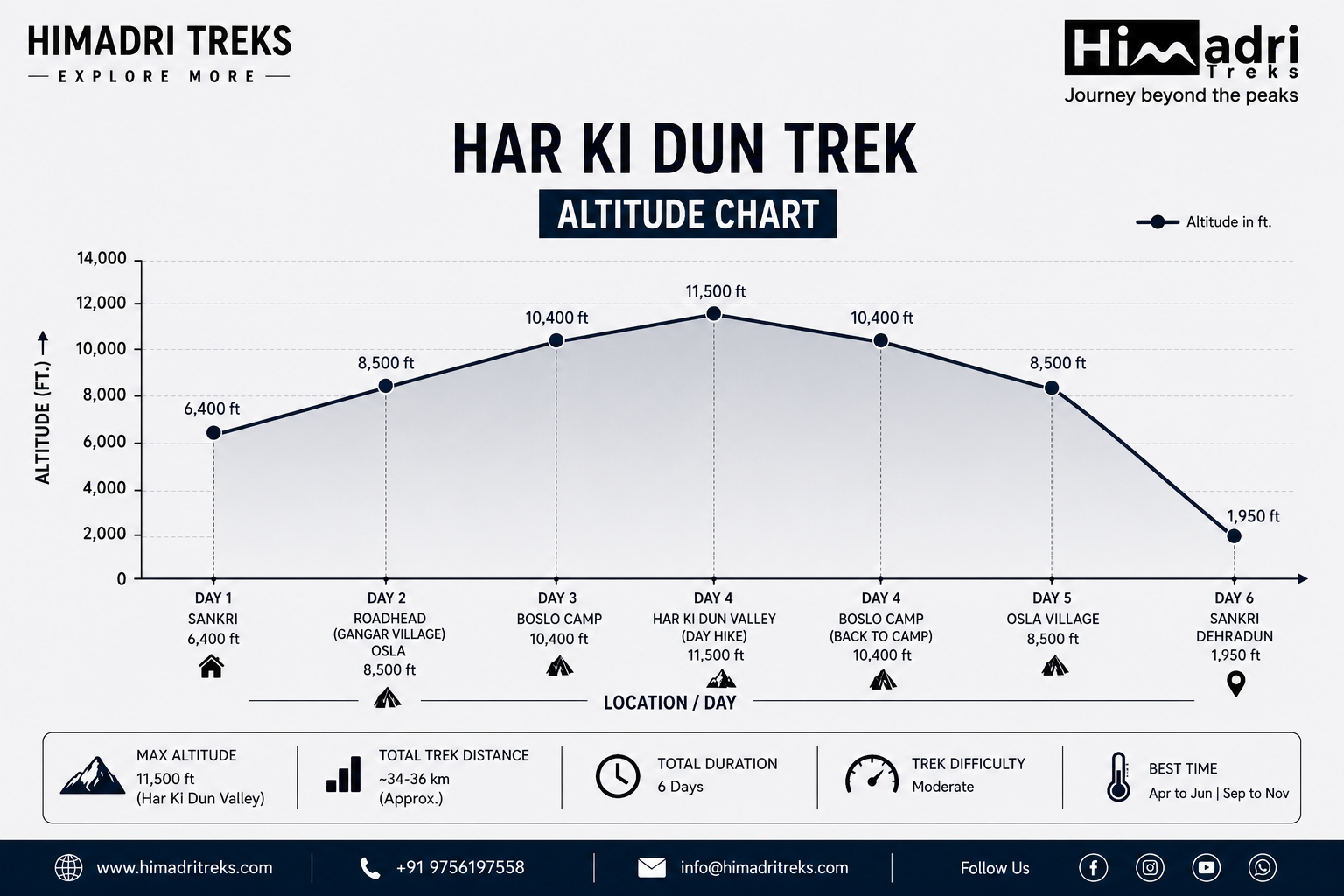
Altitude Chart
The Har Ki Dun Trek altitude chart by Himadri Treks provides a clear overview of the elevation changes you can expect throughout the journey. It helps trekkers understand the gradual rise and fall in altitude, from Sankri and Osla to Boslo Camp and the Har Ki Dun Valley, before descending back toward Dehradun. By showing the altitude at each major stage of the trek, the chart helps you understand the elevation gain, descent, and overall difficulty of each section. This is useful for planning your pace, preparing for higher-altitude sections, and allowing your body adequate time to adjust to changing elevations.
Whether you are a first-time trekker or an experienced Himalayan adventurer, studying the altitude chart before the trek can help you prepare more effectively for the trail. It also gives you a simple visual understanding of how the route climbs toward Har Ki Dun Valley at around 11,500 ft and gradually descends on the return journey. At Himadri Treks, we recommend reviewing the altitude chart along with the trek itinerary and route map so you can approach your Har Ki Dun adventure with better preparation, awareness, and confidence.
Real Trekker Reviews & Experiences – Har-Ki-Dun Trek with Himadri Treks
Video Reviews
Listen to trekkers who have experienced the Har Ki Dun Trek with Himadri Treks. These real-life reviews will give you a clearer picture of what to expect on the trail – from stunning landscapes and camp life to food, trek leader safety, and the overall experience.
These stories will help you better understand the essence of the Har Ki Dun Trek and the remarkable beauty of Himalayan valleys, traditional villages, forest trails, and breathtaking mountain views.
Firsthand experiences can answer common questions, prepare you for the trek, and give you greater confidence as you plan your Har Ki Dun adventure with Himadri Treks. Watch. Explore. Get inspired. Begin your trek with Himadri Treks.


